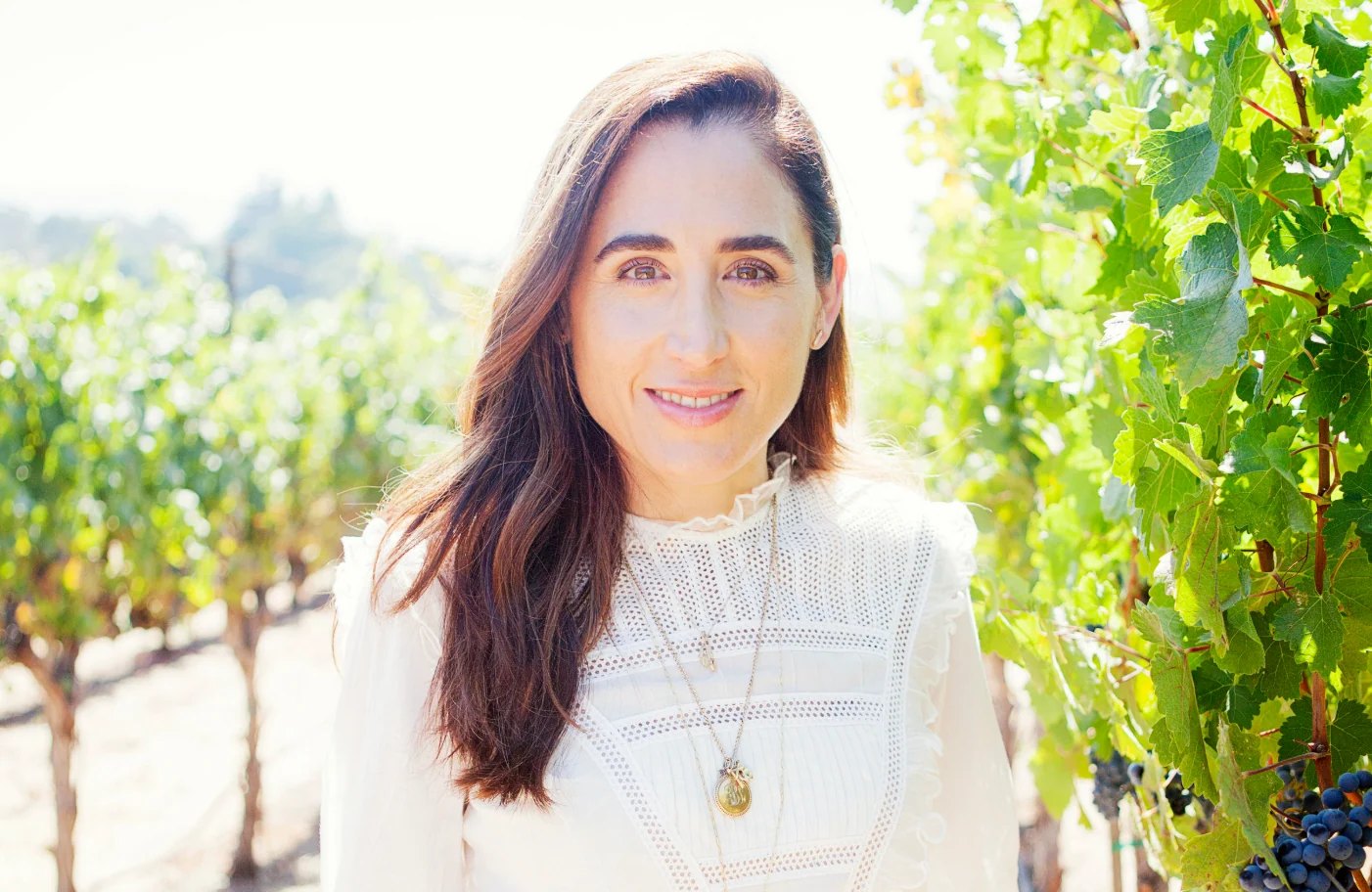
Alli Reed taught herself skincare from dermatology journals and Reddit threads, then started mixing moisturizer at home after work as an advertising copywriter. Ten years on, Stratia makes everything in its own Los Angeles lab, refuses fragrance and essential oils, and colors its bestseller with two oils from the sea buckthorn berry. She explains how a plant gets into her formulas, and what keeps others out.
Alli Reed had good skin, and for a long time she took no credit for it. Growing up, she was the friend who told someone to wash their face with body wash and a loofah. In her early twenties that luck ran out, and Reed, who had studied chemistry and once wanted to be a paleontologist, did what she does with anything that interests her. She read the research. Dermatology journals led her to Reddit’s skincare forums, the forums to a blog, and the blog to a moisturizer she mixed at home after her day job writing advertising copy.
That moisturizer, Liquid Gold, launched in May 2016 at $24, in a first batch of eight bottles. It was built on a ratio of ceramides, cholesterol and fatty acids taken from barrier research, and less than a year later Reed left her job. Renamed Lipid Gold and now $29, it is still the bestseller of Stratia, which formulates and manufactures in its own building in Los Angeles. The mission fits in one line: obsessively researched skincare, made for anyone with skin.
Stratia is not an obvious guest for Rooting Moss. Its About page tells readers to skip the clean-washing and the overly complicated rituals, and its founder has little patience for a formula sold on the romance of an ingredient. Every product is free of fragrance, alcohol and essential oils. Silicones and parabens are used on purpose, and the brand’s ingredient glossary explains why each one is there.
What we noticed is that plants run all through those lists anyway. Lipid Gold takes its yellow from two sea buckthorn oils and also carries rosehip and cranberry seed oils. Interface, a peptide cream, carries licorice root. None of them is there for the story. Each was hired to do a job, which is the standard this magazine holds too: a plant is worth reading about for what it does in skin.
In 2018 you told Refinery29 that you once advised someone to “just wash their face with body wash and a loofah in the shower.” What changed when your own skin stopped cooperating in your early twenties?
Honestly, I feel like a lot of this is atonement for the monster I used to be. I had good skin growing up, and it was the genetic lottery, not a routine. So when people asked me how I did it, my advice was useless. Then in my early twenties all those years of zero effort caught up with me.
When I get into something, I do it in a really scientific way. I’ve always been a science nerd. In elementary school I wanted to be a paleontologist, then an astronomer, and by college I had landed on chemistry. So I read everything I could: what the skin problems I was seeing were actually caused by, and what topical ingredients and formulations could actually affect them. There’s great research on what does and doesn’t work for skin. The trouble was that in a store, the only information I had about a product was whatever trickled through its marketing department. That gap is really where Stratia comes from.
Before Stratia existed you were a regular on Reddit’s skincare forums and posted formulas on your blog, The Acid Queen, mailing leftovers from your own batches to readers. What did that community teach you?
Reddit is a place where, if you want to get super deep into research, there are really good communities. I was a really active member of those communities before I’d even thought about formulating my own skincare, much less selling it. Inside them I found a very niche group of people making their own products in a very scientific way. Less “mash up an avocado and put it on your face,” and more “here are some places to buy propylene glycol in small amounts.”
That was my kind of hobby. I missed lab time. Some people get satisfaction from cooking an elaborate meal; I got it from researching a formula, making it, using it on my skin and seeing that it worked. When I had leftovers I mailed them to readers, and they kept asking for more.
The community taught me what is and isn’t important to people, and how they wish they were talked to. When I did start selling, the products were genuinely meant to fill a need it had expressed.
Liquid Gold launched in May 2016, an original formula “based on studies I’d read about a specific ratio of ceramides, cholesterol and fatty acids.” Your first release was eight bottles. Why build a first product around a ratio rather than a hero ingredient?
Because the ratio is the point. Your moisture barrier has a bricks-and-mortar structure. The bricks are flat skin cells, and the mortar is a fatty mixture of ceramides, cholesterol and fatty acids. When that mortar is compromised, you can end up with skin that’s dry and oily at the same time, extremely sensitive, or acne-prone. The research showed those three lipids working together, in proportion, which makes them ideal for mimicking and reinforcing the skin’s natural barrier.
And you’d be hard-pressed to find it anywhere. There’s a disconnect between marketing departments and cosmetic chemists, who want the most elegant, longest-lasting, best-smelling product, and the biology researchers and dermatologists looking at what skin actually needs. I wanted to make the products I wanted to see as a consumer, the ones that didn’t already exist.
I planned for it to just be a fun little side hobby. I figured I’d get a couple of orders and ship them out on the weekend. So the first batch was eight bottles.
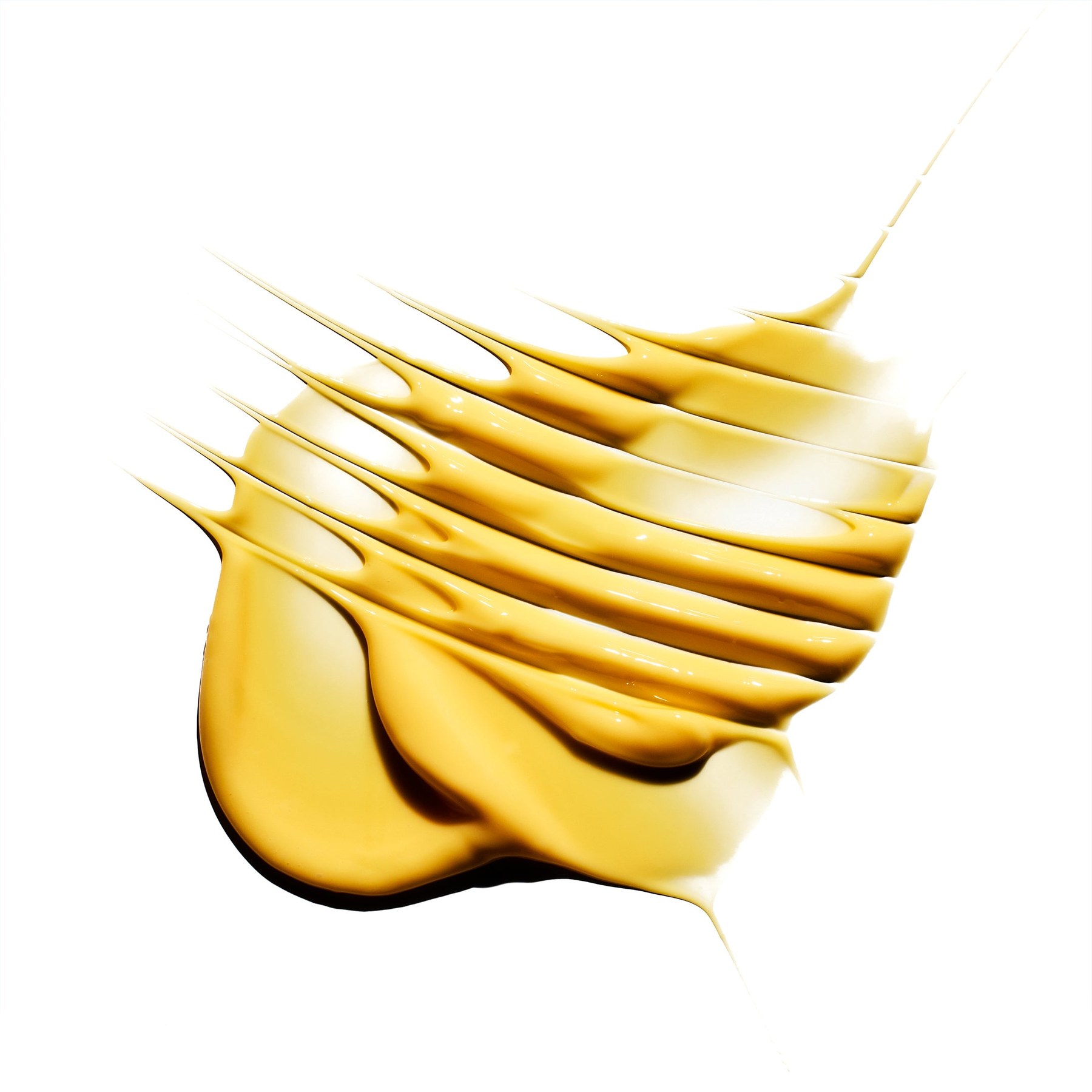
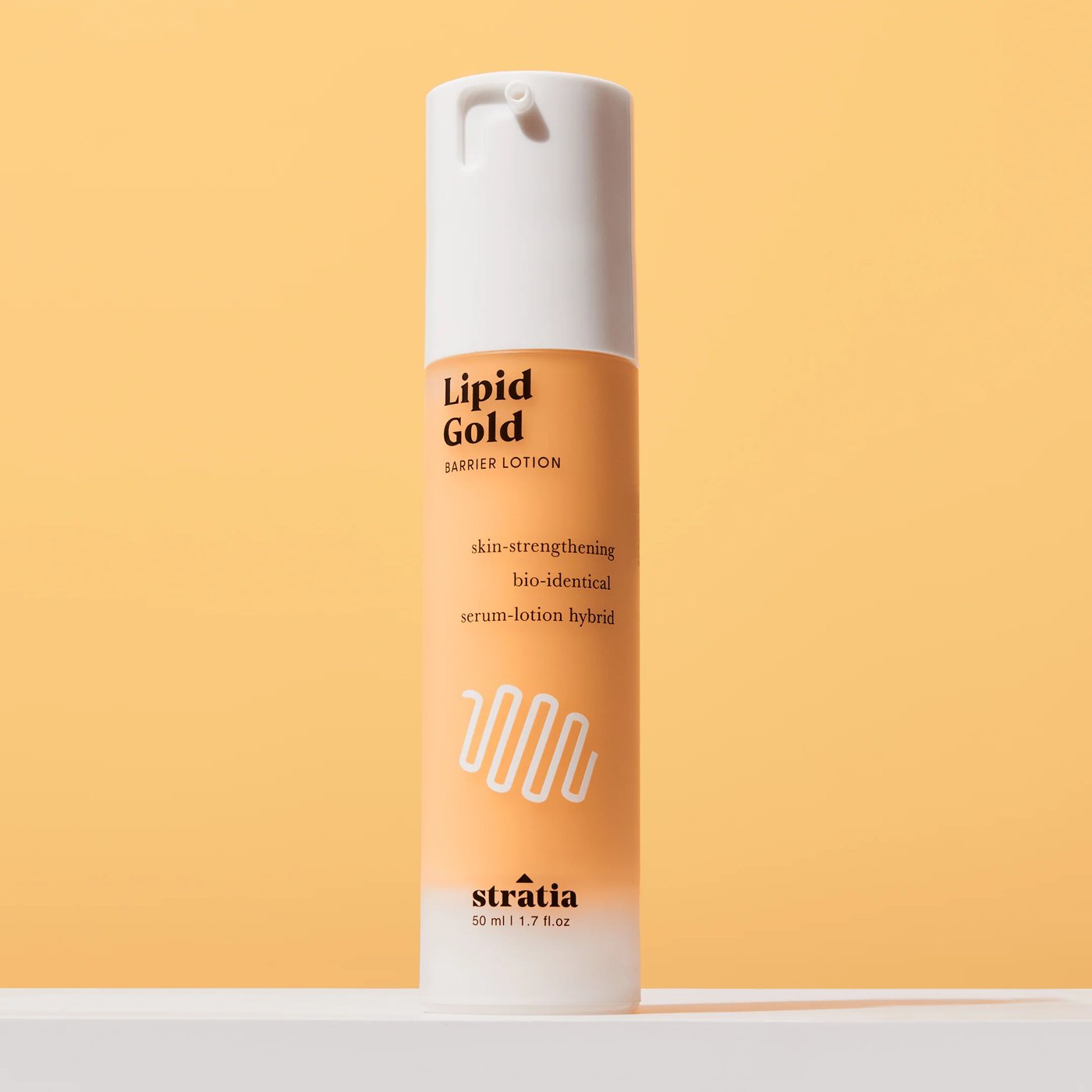
Lipid Gold’s yellow comes from two oils of one plant, sea buckthorn seed oil and sea buckthorn fruit oil, and your product page warns that very pale skin may see a temporary orange tint. Why keep an ingredient that comes with a caveat?
Because it earns its place. Every ingredient in each product serves a purpose, and sea buckthorn does a lot of work for two lines on a label. The fruit oil is bright red, the seed oil a vivid orange, and both are packed with antioxidants, phytosterols and unusual fatty acids. In a formula that’s about replenishing the barrier’s fats, they belong. So does the rosehip oil, which is rich in linoleic and linolenic acid, and the cranberry seed oil, with its even mix of omega 3, 6 and 9.
The color is completely natural. We don’t add a dye to make it look golden. It’s non-staining and vanishes on application for most skin types. For people with extremely pale skin it can leave a slight orange tint for a while, so they may want to use it only before bed.
I’d rather say that up front than have someone discover it on the way to work.
Your About page invites readers to ditch “the clean-washing and overly complicated rituals.” Every Stratia product is free of fragrance, alcohol and essential oils, yet you use silicones gladly and preserve with parabens. For a reader who assumes plant-derived means gentle, where do you draw the line?
I draw it at what an ingredient does, not where it came from. A lot of the current fads around “free from” claims lead to brands making products that are free from a million perfectly safe and effective ingredients. There’s no focus on what the product is, just what it isn’t, so you end up with nice-smelling water.
So I leave out common irritants that don’t help your skin. Fragrance is one. Essential oils are another, and that isn’t a verdict on plants. It’s a verdict on scent, which does nothing for your barrier and is one of the things most likely to upset a reactive face. Meanwhile we use silicones gladly, because they’re totally safe and really effective. Our parabens are a safe, non-irritating and effective preservative, and anything made with water has to be preserved.
Stratia might have made a lot more money if I’d followed the marketing trends. But I only want to make products that actually work. A quality product is formulated to be effective, sensorially elegant and safe. Natural isn’t on that list, and neither is synthetic.
I only want to make products that actually work.
Alli Reed
In 2023 you told The Quality Edit that a peptide is like “a little Lego tower,” carried in Interface by “microscopic taxi cabs.” The same gel-cream holds licorice root extract, rosehip seed oil and two olive-derived emulsifiers. Where do plants fit in a peptide formula?
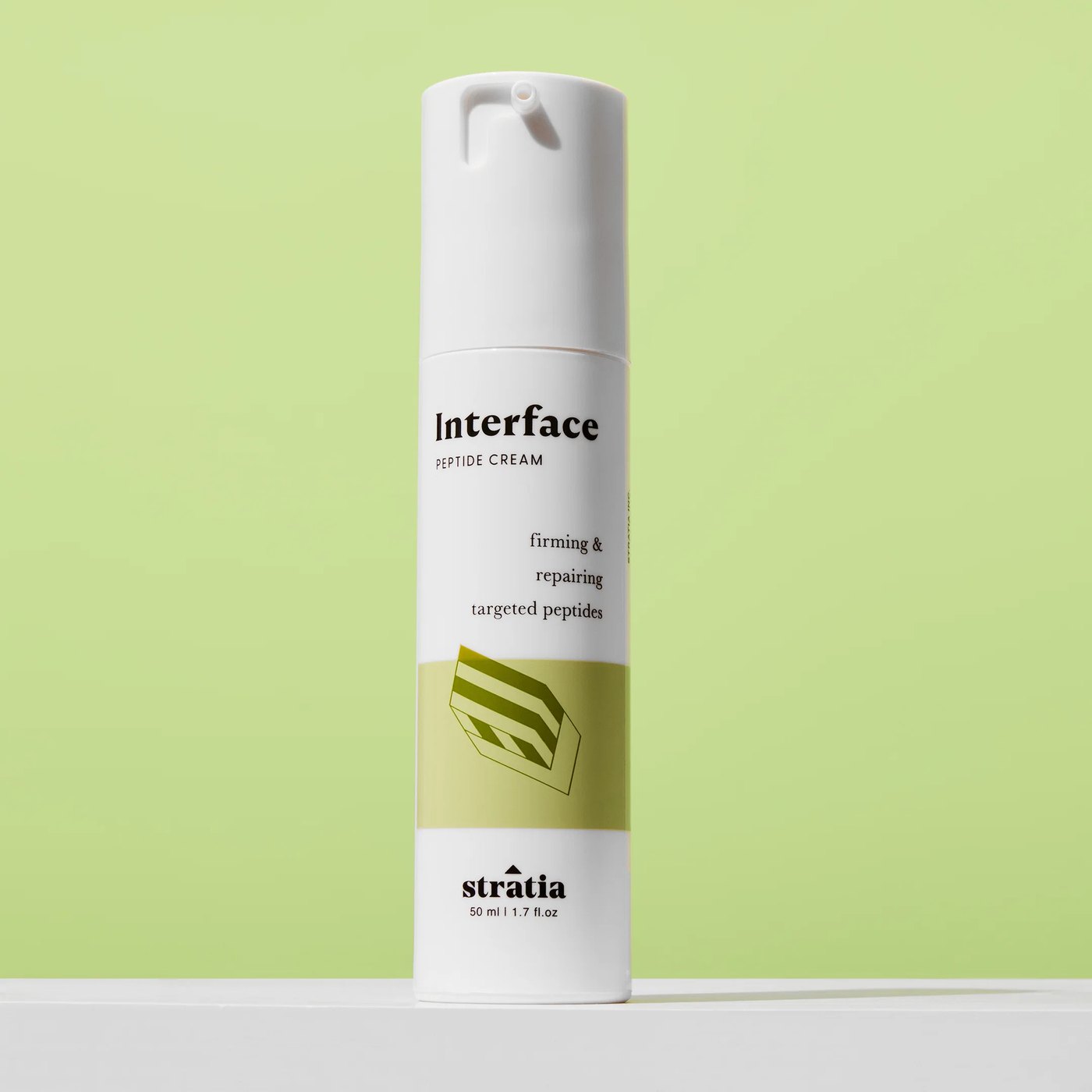
Peptides are incredibly cool. A peptide is just a short chain of amino acids, like a little Lego tower, and there’s an almost infinite number of them. Interface has seven. Some are chosen to help with the look of firmness and bounce, and some are aimed at key proteins in the skin barrier. The active peptides sit in a biocompatible shell, and that shell is lined with carrier peptides, which work like microscopic taxi cabs, taking the actives to the receptors they need to reach instead of losing them elsewhere in the skin.
The plants are the supporting cast, and I mean that as a compliment. Licorice root extract is there for the look of brighter, calmer skin. Rosehip seed oil brings linoleic and linolenic acid. Squalane, which is derived from plants, moisturizes without weight, and the olive-derived emulsifiers hold oil and water together.
I experimented a ton, and reverse-engineered some of my favorite moisturizers, until I had a gel-cream that’s super moisturizing with zero greasiness. Sensorially elegant is part of what quality means to me, because a cream only helps if you want to use it twice a day.
Stratia began in your kitchen, and by 2018 a first run of eight bottles had become 1,300 made in a single day. Everything is still formulated and made in your own building at 2600 South Santa Fe Avenue in Los Angeles. What does keeping production in-house give you?
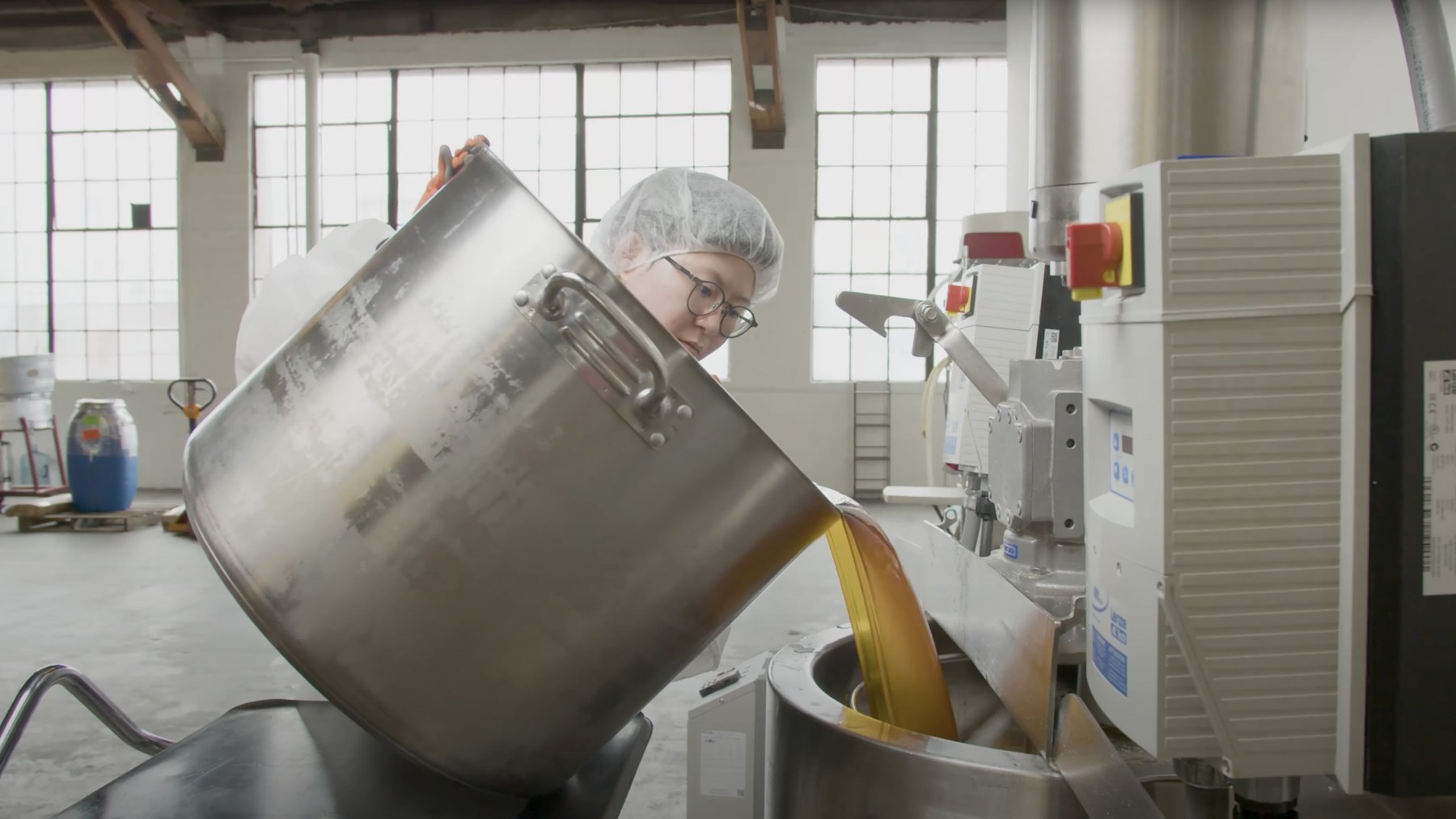
I started Stratia in my kitchen, with my little chem-lab setup, and as we grew I just made the lab bigger and bigger. I was formulating, manufacturing and shipping everything myself from my apartment, so my overhead was almost nonexistent. I didn’t have investors or mentors to help me figure out what to do next, so I made my best guesses about how to make enough product without sacrificing quality or safety.
I’m so grateful that we manufacture in-house. We’re able to have full control over everything: ingredient sourcing, operating procedures, quality assurance. It keeps us nimble, so if a product unexpectedly sells out we can have it back in stock within a few days. We can also show people exactly how their skincare is made, because we make it in the same building the whole team works in.
And it keeps prices where I want them. When you formulate and manufacture yourself, and spend less time on marketing fads and more on research, you can make effective skincare that people can actually afford.
In 2018 you said a vitamin C serum, announced to fans a year and a half before it was ready, taught you not to discuss products in development. Today’s C+C Serum pairs 15% vitamin C with CoQ10, and Stratia releases one or two products a year. What does a formula go through first?
That serum taught me humility. I announced it before I knew how many challenges the formulation would present, and so many things can happen between an idea and a product. Now I don’t talk about anything until it’s really close to launch.
The beginning is the fun part. I subscribe to a few research journals and I’m always looking out for new studies or ingredients that could become a product. My favorite thing to do is build out a potential formula in Excel and then try it at my little formulation station. That’s my happy place. After that come prototypes, a lot of them, and then our volunteer testers. We’ve had around a thousand.
The pace is deliberate. The guiding focus is to make things I don’t think have an equivalent on the market yet. If there are already excellent, affordable versions of something, I’m not sure I could do anything unique with it. I only want to release a product if it’s good.
You built Stratia from “very meager savings,” turned a profit in the second month and reached $2 million in sales by 2019. In November 2021 you took investment from Fable, the investment arm of Natura &Co. Why take a partner you did not need?
We didn’t need to fundraise. We were profitable since month two. For years we said no to things, including large retailers who wanted to stock us, because I wanted to be sure nobody was telling us what to formulate or what to release next.
What I wanted later was a partner for best practices rather than me guessing. I’d built everything by trial and error, and a growing team deserves better than my best guesses.
Marketing is the same story. Growth came from word of mouth, from people on Reddit and Instagram who shared the products. We are certainly not going to be putting all of our eggs in the Facebook marketing basket. Brands ask me how to market on Reddit, and my answer is, “Don’t, don’t try it.” Reddit hates being marketed to. What works is just radical authenticity, which sounds like a marketing gimmick, but I mean it sincerely: believing completely in the quality of the product and being super transparent with your customers.
In 2021, about one in five Stratia customers was male, about one in five lived outside the US, and nearly half came back to buy again. For a Rooting Moss reader with a reactive face and a shelf of oils, where should they begin?
Start with Lipid Gold. It’s for all skin types, and it works especially well for dehydrated or over-exfoliated skin, which describes a lot of people who love skincare. Use one to two pumps, about the size of a dime, twice a day. If your skin is normal to oily, it may be all the moisturizer you need. If it’s drier, follow it with a heavier cream.
If the look of firmness is what you’re after, Interface is the next step. It plays well with others, under makeup or on top of serums, and it can be your only moisturizer too.
Then keep the routine short. Forget the fear-mongering and the 30-step routine, and focus on the facts. I want people to feel genuinely excited about skincare and about how incredibly cool their skin is. Healthy skin is beautiful skin, and that looks different for everyone.
Closing note from the desk
What stays with us is how plainly Reed draws her line. A plant gets into a Stratia formula the way anything else does, by doing a job that fits in one sentence of the ingredient glossary. Sea buckthorn is there for its fatty acids and antioxidants, and its color comes along. Essential oils stay out because scent does nothing for the barrier. Silicones and parabens stay in because they work. A botanical magazine could read that as a challenge. We read it as agreement.
Stratia set out to put the findings of barrier research into bottles anyone with skin could afford, made in one Los Angeles building by the people who formulate them and explained ingredient by ingredient. It began as eight bottles for a few Reddit readers. Ten years later it still releases only what its founder thinks is good.
Product spotlight
Lipid Gold, $29 for 50 ml or $53 for 100 ml. A lightweight barrier lotion of ceramides, cholesterol and fatty acids with niacinamide, made to support the skin’s moisture barrier, and colored yellow by two sea buckthorn oils. Apply one to two pumps, about a dime’s worth, twice a day. Normal to oily skin may need nothing more; drier skin can follow with a heavier cream.
Interface, $29 for 50 ml. A daily peptide gel-cream with seven peptides, licorice root extract, rosehip seed oil, pro-vitamin B5 and hyaluronic acid, made to help with the look of firmness and to support the moisture barrier. Apply one to two pumps twice a day, on its own as a moisturizer or layered over serums and under makeup.

Shannon Brekke
Shannon edits the news desk and the field guides at Rooting Moss. She keeps a running list of every plant extract that has appeared in a formula this year.
More from Shannon Brekke →