A client with a stripped, tight barrier wrote to say she no longer needed heavy moisturizer, even in harsh weather, after using a serum made for exactly that state. That small report became a founding story in miniature for Marie Veronique.
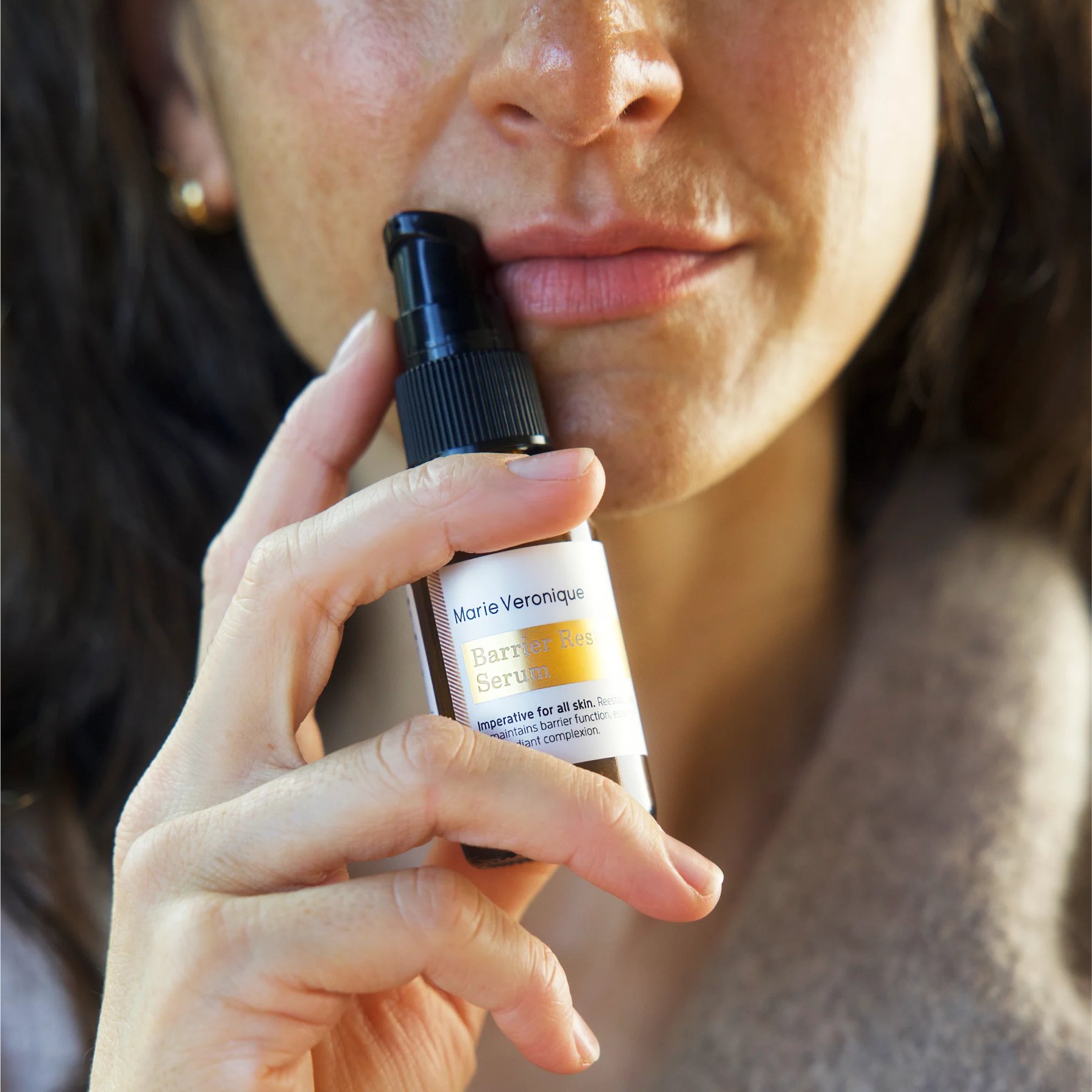
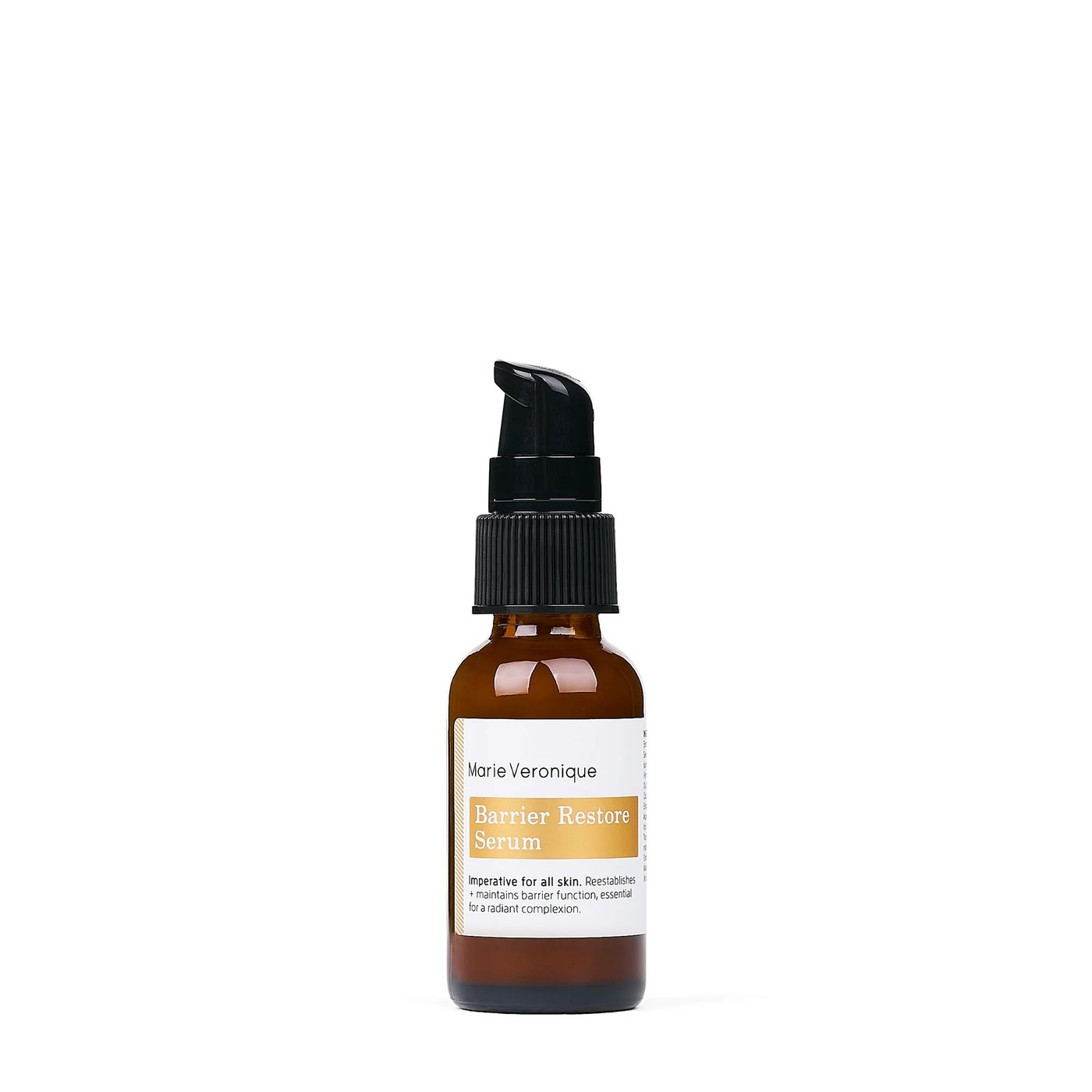
The note arrived after Barrier Restore Serum, originally created for clients with compromised barriers, had left the lab in Berkeley. Testing, in the brand account, revealed users experienced enhanced skin comfort, reduced need for heavy moisturizers, and absence of dryness even in extreme conditions. It was not a promise of transformation. It was relief described plainly.
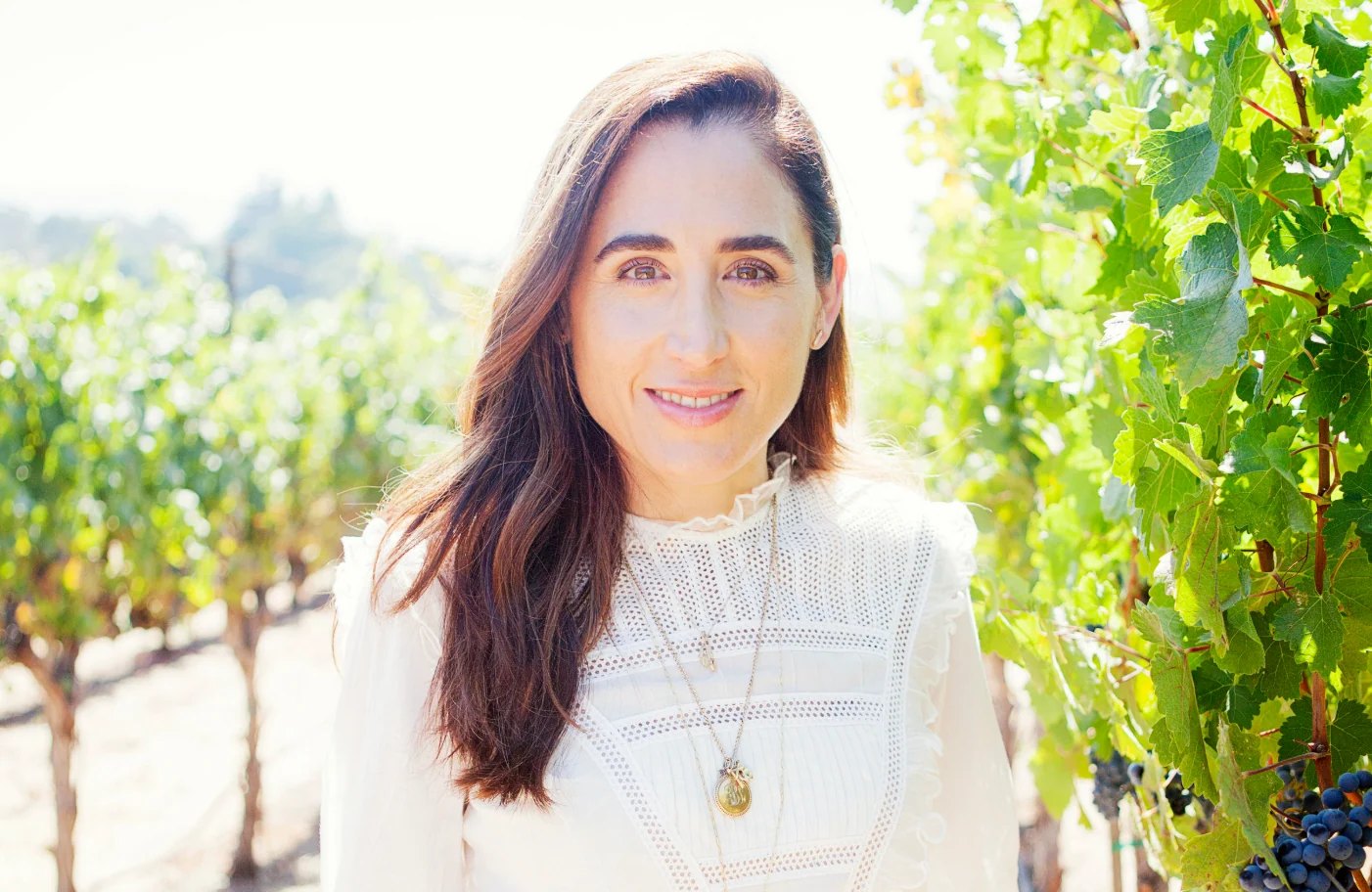
Marie-Veronique Nadeau started the line in 2002 for similar reasons. Teenage acne, later rosacea, and topicals that worked for those conditions just did not exist. A trained esthetician with degrees in math and science and years as a high school chemistry teacher, she began making her own. She was early to non-nano zinc oxide sunscreen, early to microbiome friendly formulas, and steady in her refusal to chase labels.
What we noticed, reading across interviews and ingredient lists, is how plant led her work remains without being plant romantic. Green tea, jojoba, bakuchiol, fisetin and carotenoid rich oils sit beside ceramides, urea, niacinamide and encapsulated retinol. The through line is biomimetic thinking, in her words imitating nature in all things, and a lab discipline that treats botanicals and synthetics by the same standard of safety and function. Tell the truth, the brand philosophy, sounds simple until you try to formulate by it.
You began with your own teenage acne and later rosacea, and have said topicals that worked for those conditions just did not exist. What did that absence teach you about formulating for reactive skin?
What I learned was humility. When your own skin flares, you pay attention in a different way. You notice what stings, what leaves you tight by noon, what looks calm for an hour and then rebels. My background was math and science, then teaching chemistry, then esthetics, so I could read a formula and also watch a face. That combination stayed with me.
Our product line was born out of our desire to deal successfully with the most challenging skin issues. Acne and rosacea are not simple dryness. They involve barrier, microbes, inflammation. I got into chemistry when I went to the university and discovered I loved it, and that love became practical. I wanted making safe to wear products that also improved skin appearance or had some needed functionality. If a formula could not do both, it did not stay.
You describe the brand philosophy as tell the truth, and you have called the word organic virtually meaningless after years of marketing use. How do you define clean when you choose an ingredient?
My advice is to ignore marketing claims and know your ingredients. That has not changed. The ways in which the word organic is bent to fit marketing campaigns has made the term virtually meaningless. A word on a front label tells you very little about dose, stability, or how an ingredient behaves on living skin.
For us clean means ingredients with a track record for safety and efficacy, whether they come from a field or a lab. Science should be informing formulation whether you are using botanicals or synthesized ingredients. We are fragrance and essential oil free, vegan in many formulas, and attentive to the microbiome, but those choices follow function. If a plant extract supports skin comfort and has data behind it, we use it. If a lab made molecule does the job more reliably, we consider that too.
You call the approach biomimetic, meaning we imitate nature in all things. What does that look like in the lab when you are working with plants?
It means we start with how skin already works. Skin is a dynamic, intelligent system. It knows how to take care of itself when the barrier is intact and the microbial community is balanced. Our job is to preserve what is essential rather than push skin toward future imbalance.
With plants, that means asking what a compound does in its own environment and whether that function translates. Green tea brings polyphenols studied for antioxidant activity. Jojoba esters resemble skin lipids and spread well without heaviness. Bakuchiol offers a plant derived option for those seeking the appearance of smoother tone without conventional retinoids. We steep, so to speak, in research first. Research is 90 percent of the work. The other 10 percent is a lot of creating and revising in the lab. Then we test texture, stability, and comfort on real reactive skin.
You have said the most common mistakes are over-cleansing and over-exfoliation. Why did you build cleansing and misting as barrier support rather than a fresh start?
Because probably over-cleansing and over-exfoliation are what bring many clients to us in the first place. People scrub to calm breakouts and end up with more redness. Skin really does know how to take care of itself if we stop stripping it.
Our oil cleanser uses oils to help loosen congestion within the follicle while low suds surfactants rinse without leaving skin tight. The Balancing HypoTonic follows as a different way to think about hydrating, balancing the liquid layer on skin before serum and oil. Rescue Tonic and the Pre and Probiotic Daily Mist were made to support microbial diversity, including for skin that shows eczema or dermatitis type dryness. The ritual is slow on purpose. Cleanse lightly, mist, treat thinly, seal. Roots hold soil. Barrier holds water. The same logic applies.
Barrier Restore Serum was originally created for clients with compromised barriers, and users reported enhanced comfort and less need for heavy moisturizers. How did you build it from root to finish?
We began with barrier lipids, then water holding, then calm. Ceramide NP supports the lipid matrix that slows moisture loss. Sodium PCA and urea help hold water in the outer layer. Sodium hyaluronate adds slip and surface hydration. Then the plant side. Jojoba oil and esters for compatibility, green tea extract for antioxidant support, resveratrol for the same reason, Lactobacillus for microbiome friendly positioning, and a small amount of zinc oxide that reflects our sunscreen history.
Use is part of the formula. Shake well. Apply a thin layer after cleansing and misting, then oil. Use within six months of opening. That rhythm matters because a compromised barrier does not need more, it needs steady. When people say they felt comfort in extreme conditions, I hear that the layering held. The serum supports the appearance of smooth, even skin while the barrier does its quiet work underneath.
Skin really does know how to take care of itself if we stop stripping it.
Marie-Veronique Nadeau
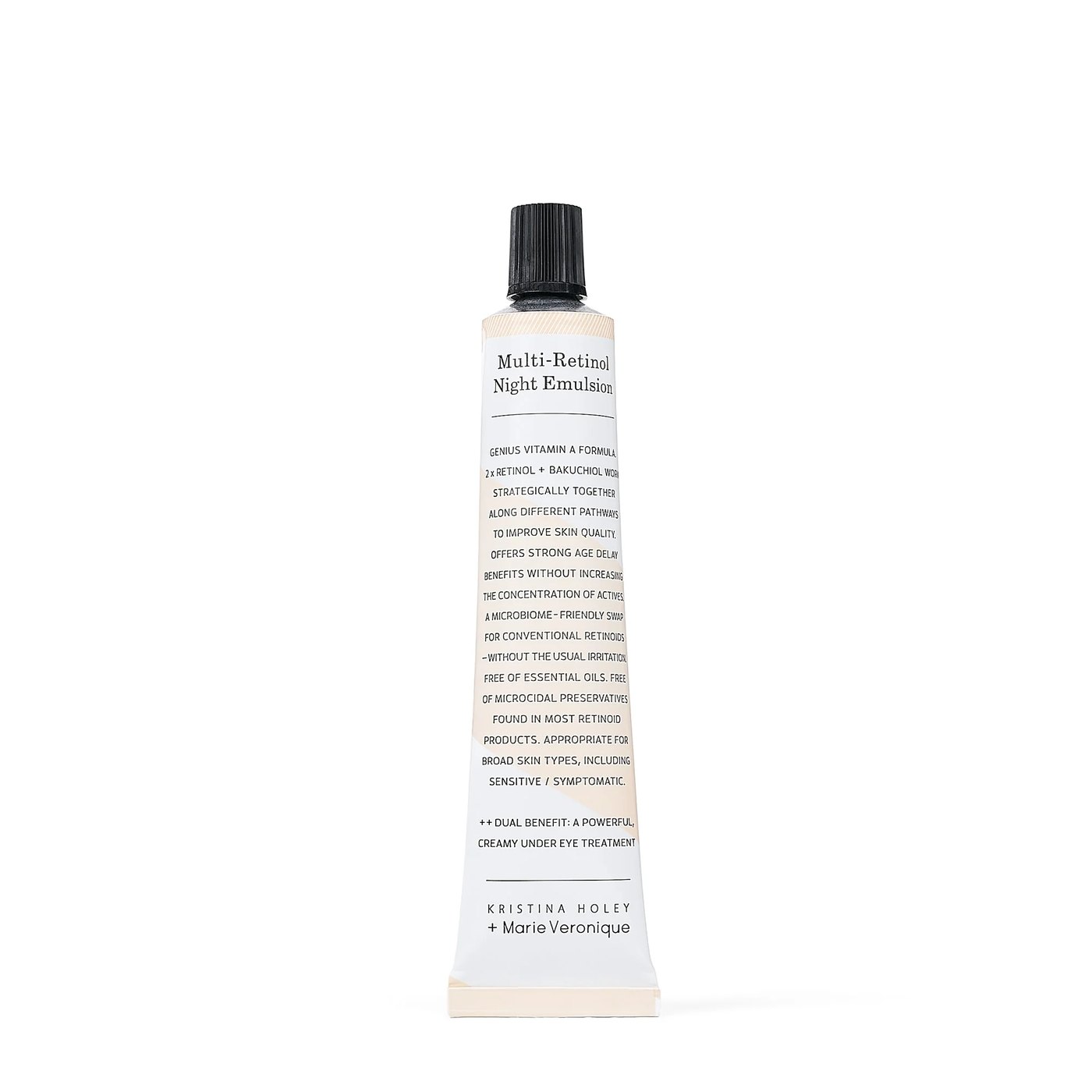
Your Multi-Retinol Night Emulsion pairs encapsulated retinol with retinyl sunflowerseedate and bakuchiol, and is described as a microbiome friendly alternative for conventional retinoids. Why that trio, and who is it for?
For every woman over 30, retinol, unless pregnant or breastfeeding. That remains my general view, paired by day with vitamin C and zinc oxide sunscreen. But conventional retinoids can be harsh, especially for sensitive skin. We wanted the appearance benefits without the familiar cycle of peel and regret.
Encapsulation slows release so retinol meets skin more gradually. Retinyl sunflowerseedate links a retinoid to sunflower derived fatty acids, which suits our lipid friendly base. Bakuchiol, from the babchi plant, is included for those who want plant support for the appearance of firmness and even tone. Together they allow a nightly emulsion that supports the appearance of smoother texture while remaining mindful of the barrier and microbes. Start slowly, a few nights a week, then build as comfort allows. Night is for collagen, day is for antioxidants. That cadence respects skin biology.
You were among the first to formulate a non-nano zinc oxide sunscreen, and Sheer Tint Zinc SPF 30 is described as a modern evolution of your Everyday Coverage Tinted Sunscreen. What did the plant oils teach you about wearing minerals daily?
Zinc is honest protection, but texture decides whether people wear it. Early non-nano zinc could feel chalky and pale. We learned that the vehicle matters as much as the filter. Carotenoid rich oils and essential fatty acids help minerals spread, soften the cast, and leave a finish people accept.
Protective Day Oil came from that learning. It provides daily moisture, and carotenoids filter UVA and provide additional protection when layered under SPF. Sheer Tint Zinc SPF 30 carries the idea forward in three sheer shades. Aging is inevitable. Premature aging is preventable. Use sunscreen. That line is blunt because daily wear is what supports the appearance of even tone over years. A greenhouse teaches patience. So does sunscreen. You do not see the harvest the same season you plant.
The new Senolytic Balm and Senolytic Serum center on fisetin, a flavonoid described as helping reduce aged stressed cells. Why harvest from that corner of botany now?
With age, some cells stop dividing but do not clear. They linger and send signals that may affect the look of surrounding tissue. Fisetin, found in strawberries, apples and other plants, is studied as a senolytic compound, meaning it is of interest for its role around these senescent cells. We were curious whether topical use in a lipid rich balm could support the appearance of resilience and plumpness.
The balm is rich and lipid based to deliver intensive nourishment that supports cellular longevity language we use carefully, skin structure, and barrier health. The serum is more targeted. We formulate, develop and test in our in-house lab under Good Lab Practices and manufacture in-house under GMP, in small batches in Berkeley. That lets us work with a flavonoid that needs careful handling for stability and feel. It is early work, and we describe it as support for the appearance of skin, not a reversal of age.
You work in-house in Berkeley, formulate under Good Lab Practices and manufacture under GMP, with your daughter Jay Nadeau and Kristina Holey part of the research and skin health team. The Solano Avenue shop is reported as closed. How has that shaped the practice?
Making in-house keeps us close to the formula from first beaker to filled bottle. Small batch production lets us revise, which we do often. Kristina Holey, our Director of Skin Health since 2021, helped develop a trio of serums and now guides consultations through our Skin Health Concierge. My daughter Jay, a physicist and biomedical engineer, collaborates on ingredient selection. Three generations of questions at one bench, you could say.
The shop at 1820 Solano Ave is listed as closed in a recent directory, which we have not independently confirmed for print, and our focus remains the lab and online care. People send notes about dryness, breakouts, redness. We read them slowly. Then we adjust routine order, amount, frequency. Healthy skin is not achieved by doing more, it is achieved by preserving what is essential. That sentence on our site guides consults as much as formulas. Less, but exact.
Closing note from the desk
What stays with us is the steadiness of the method. Read the ingredient, trace it to place and function, test it on skins that flare easily, revise in a small Berkeley lab. Nadeau writes as a skeptic and formulates like a gardener, saving what supports life and pruning what irritates.
Marie Veronique set out to make topicals that worked for acne, rosacea and sensitized barriers when nothing clean and effective existed. More than two decades on, the brand still measures success in comfort notes from clients and formulas that preserve rather than push. That is a quiet harvest, and worth reading slowly.
Product spotlight
Barrier Restore Serum, 120 dollars for 1 oz or 30 ml, is for compromised barriers that feel tight or look uneven. Ceramide NP with urea, sodium PCA, jojoba, green tea and Lactobacillus supports moisture retention and the appearance of calm. Shake well, press a thin layer onto cleansed and misted skin morning and night, then follow with oil. Use within six months of opening.
Multi-Retinol Night Emulsion, 135 dollars for 1 oz or 30 ml, is the night step for mature or uneven looking skin that wants retinoid appearance benefits with less harshness. Encapsulated retinol plus retinyl sunflowerseedate plus bakuchiol supports the appearance of smoother texture and tone. Apply a small amount at night a few times weekly, then build frequency as comfort allows.

Erin Dunleavy
Erin produces the interviews: the research, the question lists, the follow-ups. She reads ingredient lists for fun and admits it.
More from Erin Dunleavy →